No products in the basket.
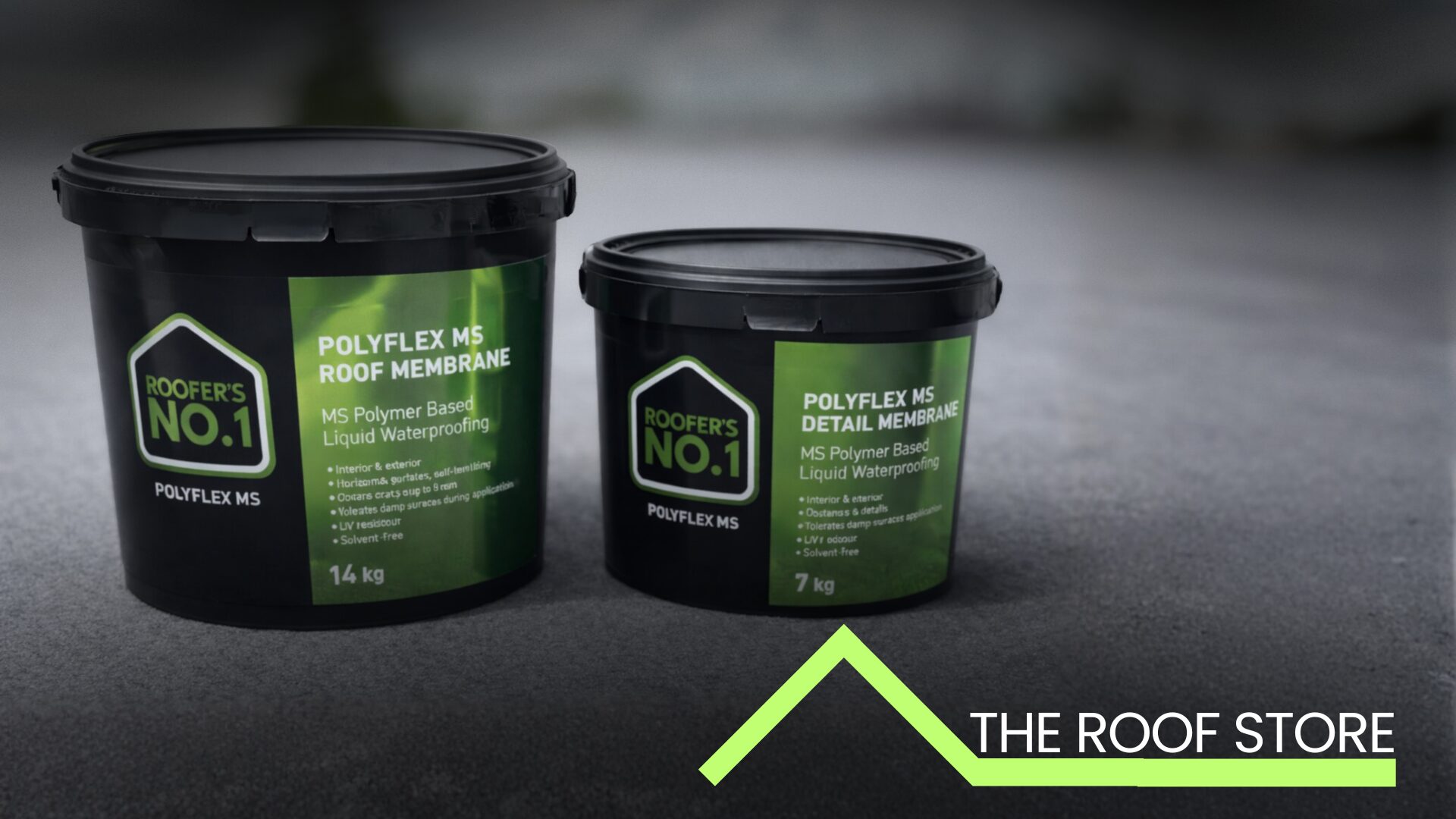
When it comes to flat roofing in the UK, unpredictable weather can quickly delay projects. Persistent rain, damp substrates and fluctuating temperatures make choosing the right waterproofing system critical.
That’s where Polyflex MS stands out. In this guide, we’ll explain what Polyflex MS is, how it works, why it performs well in damp conditions, and how it compares to other liquid roofing systems.
Polyflex MS is a high-performance, MS polymer-based liquid waterproofing system designed to create a seamless, flexible, and durable waterproof layer. Unlike traditional solvent-based liquid coatings, MS polymer technology cures by reacting with atmospheric moisture. This means it can tolerate damp conditions during application (though not standing water), making it particularly suited to the UK climate.
Once cured, it forms a fully bonded, elastic waterproof membrane that can accommodate movement in the roof structure without cracking.
It is commonly used for:
1. Performs in Damp Conditions
One of the key advantages of MS polymer technology is its moisture-curing properties. Unlike some traditional liquid systems that require completely dry substrates, Polyflex MS can be applied in damp conditions (surfaces must be free of standing water). With how wet the weather has been recently, this makes it a practical solution for contractors who need to keep projects moving.
2. Seamless Waterproof Protection
As a liquid-applied system, Polyflex MS creates a continuous, joint-free membrane. This eliminates weak points often found in sheet systems where seams and overlaps occur.
The result is:
• Reduced risk of leaks
• Fully bonded waterproof protection
• Reliable coverage around complex details
3. High Elasticity & Crack Bridging
Flat roofs naturally expand and contract with temperature changes. Polyflex MS remains highly flexible after curing, allowing it to accommodate structural movement without splitting or becoming brittle.
This makes it suitable for:
• OSB and Timber deck substrates
• Concrete decks
• EPDM
• Metal Roofing
• Bituminous Felt Roofing
• Refurbishment over existing substrates
4. Solvent-Free & Low Odour
Compared to some traditional liquid systems, Polyflex MS offers:
This makes it ideal for residential properties, schools, garden rooms and other occupied buildings.
Roof Refurbishment Projects
Suitable for overlay applications where full strip-and-replace may not be required (subject to substrate suitability).
Roof Details & Upstands
Ideal for waterproofing complex areas such as penetrations, edges, and vertical transitions.
Weather-Sensitive Installations
Its moisture-curing capability makes it useful when dry weather windows are limited.
Polyflex MS is part of the liquid-applied waterproofing category, alongside systems such as polyurethane, acrylic, and PMMA coatings. However, there are important differences.
| Feature | Polyflex MS (MS Polymer) | Typical Polyurethane/Acrylic/PMMA System |
| Cure Method | Moisture-cured | Chemical or catalyst-based (system dependent) |
| Damp Surface Tolerance | Good (no standing water) | Often requires fully dry substrate |
| Flexibility | High elasticity | Generally flexible |
| Seamless Finish | Yes | Yes |
| Solvent-Free Options | Yes | Varies by product |
| Odour During Application | Low | Can be strong (product dependent) |
Polyflex MS offers a balance of flexibility, ease of application, moisture tolerance, and low odour — making it particularly practical for UK roofing projects where weather conditions are unpredictable.
Is Polyflex MS Suitable for EPDM Roofing?
Yes. Polyflex MS can be used in conjunction with EPDM roofing systems, particularly for detailing, repairs, or waterproofing complex areas where a liquid-applied solution provides better coverage than sheet membrane alone.
Always follow manufacturer guidance regarding compatibility and preparation.
Can Polyflex MS be applied in the rain?
It tolerates damp conditions but should not be applied to surfaces with standing water or during rainfall.
Does it require primer?
Primer requirements depend on the substrate. Always follow the manufacturer’s technical data sheet.
How long does it take to cure?
Skin formation typically occurs within a short period, with full cure dependent on temperature, humidity, and thickness applied. Typically 2mm per 24 hours.
At The Roof Store, we supply professional-grade liquid waterproofing systems trusted by contractors across the UK. Whether you’re carrying out a refurbishment, repairing a flat roof using Roofer’s No 1 Roof Membrane, or waterproofing detailed areas using Roofer’s No 1 Detail Membrane, Polyflex MS offers reliable performance when the weather isn’t ideal.
If you’re looking for an all-weather liquid waterproofing solution that delivers flexibility, durability, and ease of application — Polyflex MS is a smart choice.

