No products in the basket.
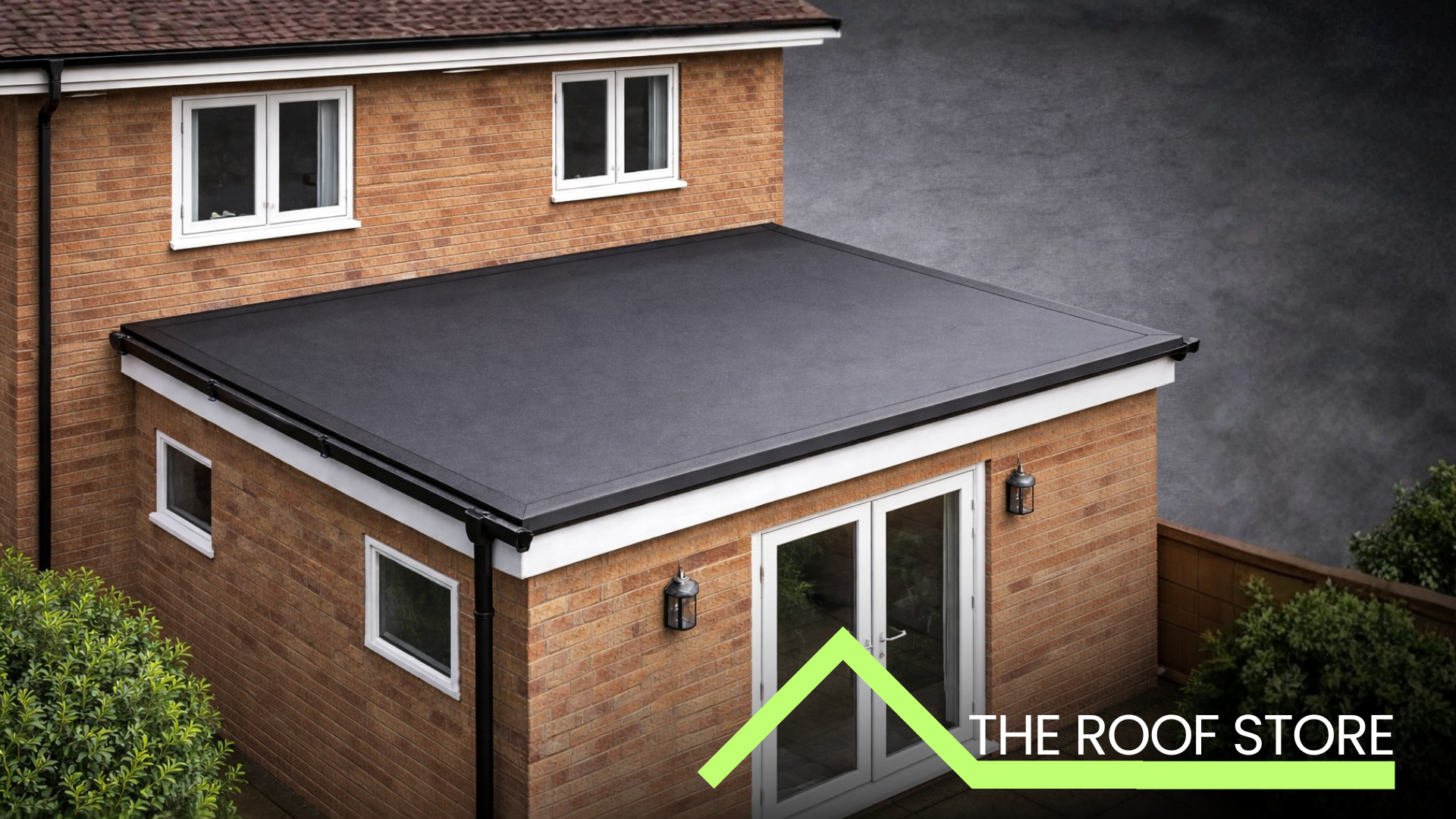
If you’re installing an EPDM roof on a garage, extension, garden room or dormer, getting the materials right from the start will save time, prevent leaks, and avoid costly call-backs.
This guide breaks down exactly what you need for a complete EPDM flat roof installation — whether you’re a DIYer or a roofing contractor.
A one-piece EPDM membrane is the foundation of the system. Unlike traditional felt, EPDM comes in large sheets, meaning:
• Fewer joints
• Faster installation
• Lower leak risk
• 70 year life expectancy
For most residential roofs, ordering a membrane cut to size reduces waste and speeds up fitting.
Pro Tip: Always allow the membrane to relax for 30-60 minutes before bonding.
There are typically two adhesives required:
Used for bonding the membrane to timber decking across the main field area.
Contact Adhesive (Perimeters & Upstands)
Used on edges, vertical surfaces and detailed areas such as upstands and parapet walls.
Important: When applying contact adhesive, you must allow the adhesive to become touch dry before bonding the EPDM membrane to the surface. Apply adhesive to both the substrate and the back of the rubber (where required), wait until it is dry to the touch (not wet or stringy), and then carefully bring the two surfaces together. Bonding too early can cause bubbling, poor adhesion and long-term failure.
Skipping the correct adhesive is one of the most common causes of failure.
Primer is required when installing:
It prepares the rubber surface to ensure tapes and accessories perform correctly.
Without the use of primer, will result in failure. detailing will fail.
Trims aren’t just cosmetic — they:
Common residential trim types include:
Getting trims right is essential for long-term performance.
Flat roofs must drain correctly to avoid ponding water.
Depending on your setup, you may need:
Outlets are joined to the membrane using primer and tape to create a watertight seal.
Poor drainage = premature roof failure and water ingress.
Optional (But Recommended) Extras
To ensure a professional result, consider:
EPDM Installation Checklist
✔ One-piece EPDM membrane
✔ Water-based deck adhesive
✔ Contact adhesive
✔ Primer
✔ Edge trims
✔ Drainage outlet
✔ Tapes & detailing accessories
Why Choose EPDM for Residential Flat Roofs?
For garages, home extensions and garden rooms, EPDM remains one of the most reliable and cost-effective flat roofing solutions available.

